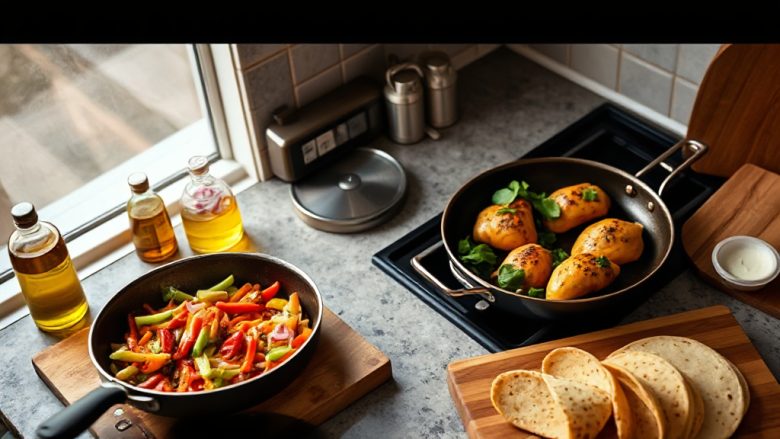
It’s 6:47pm. You got out late, the bus crawled, and now you’re standing in front of an open fridge that contains half a cabbage, three eggs, and a jar of mustard. Ordering in again feels easier, but it costs money and you’re tired of the same takeaway. What you need isn’t a 40-recipe cookbook. You need a few reliable formulas that turn whatever is in the fridge into dinner in under half an hour, with one pan if you’re lucky.
These easy dinner recipes for busy weeknights are built for exactly that situation. Each one is a method, not a rigid list. Learn the base, then swap in whatever protein, vegetable, or carb you actually have. No special shopping trip required, no obscure ingredients, and minimal washing up.
Five Flexible Formulas for Fast Weeknight Dinners
1. The One-Pan Protein and Veg Tray
This is the formula that saves the most evenings. Heat the oven to 220C (200C fan). Chop a protein and a vegetable into similar-sized pieces, toss both in oil, salt, and whatever seasoning you’ve got, and spread them on one large tray. Roast for 20 to 25 minutes, turning once if you remember.
The base works with chicken thighs, sausages, salmon fillets, halloumi, or firm tofu. For vegetables, think peppers, red onion, courgette, broccoli florets, or halved baby potatoes. If you’re using potatoes, give them a 10-minute head start before adding anything softer. Squeeze a lemon over the top when it comes out and you’ve got something that tastes far better than the effort suggests.
Swap options: add a tin of chickpeas for bulk, crumble feta over the top for the last five minutes, or stir through a spoonful of harissa or pesto before roasting. Cleanup is one tray and one chopping board.
2. The 15-Minute Skillet Pasta
You don’t need to boil pasta separately. Put your pasta in a wide pan with just enough water to cover it, add a pinch of salt, and simmer. Stir every couple of minutes so it doesn’t stick. When the water has mostly absorbed and the pasta is nearly tender, you’ve got a starchy base that’s ready for anything.
At that point, stir in a handful of grated cheese, a spoonful of cream cheese or creme fraiche, a clove of crushed garlic, and a handful of spinach or frozen peas. The residual heat wilts the greens and melts the cheese into a loose sauce. If it looks dry, add a splash of the pasta water you saved. If it looks wet, cook it down for another minute.
Swap options: tinned tuna, leftover roast chicken, chopped cherry tomatoes, olives, or a spoonful of sundried tomato paste. This is one of the easiest dinner recipes for busy weeknights because it’s genuinely one pan from start to finish.
3. The Fried Rice Formula
Cold cooked rice is the key here. If you don’t have any, cook a batch in the morning or use a pouch of pre-cooked rice. Heat a wide pan or wok over high heat with a little oil. Scramble two eggs, push them to one side, then add your vegetables. Frozen mixed veg works perfectly and needs no chopping.
Add the rice, breaking up any clumps with your spatula. Splash in soy sauce, a little sesame oil if you have it, and a pinch of sugar or a drizzle of honey. Toss everything together for two to three minutes until it’s hot through. That’s it.
Swap options: leftover roast meat, chopped bacon, prawns, or a handful of cashews. Add a chopped spring onion at the end if you’ve got one. This is the fastest formula on the list and the most forgiving.
4. The Quesadilla or Toastie Shortcut
Some nights you don’t want to cook at all. That’s fine. A quesadilla or a filled toastie counts as dinner if you build it properly. Take two tortillas or two slices of bread. Spread one with something wet, like refried beans, tomato salsa, or a little mustard mixed with mayo. Add cheese, then a filling: leftover chicken, tinned beans, sweetcorn, spinach, or sliced peppers.
Cook in a dry pan over medium heat for two to three minutes per side, pressing down with a spatula so everything melts together. Cut into wedges. Serve with a handful of salad or a few cherry tomatoes on the side so it feels like a meal rather than a snack.
Swap options: use pesto and mozzarella for an Italian version, or curry paste and leftover potatoes for something spicier. It’s a ten-minute dinner that uses up odds and ends.
5. The No-Cook Assembly Plate
Not every dinner needs heat. On the nights when you’re too tired to stand at the hob, build a plate from things that are already ready. Think tinned fish, boiled eggs, cheese, hummus, olives, sliced cucumber, tomatoes, crackers, and a handful of grapes or apple slices. Add a drizzle of olive oil and a pinch of salt.
It sounds too simple, but it’s satisfying, balanced, and takes five minutes. Keep a few of these items in the cupboard and fridge as a fallback so you’re never stuck. This is the formula that stops a late night from turning into an expensive takeaway.
Making These Formulas Work on a Real Schedule
The trick isn’t memorising recipes. It’s keeping a small set of staples ready so any formula can be assembled without a trip to the shop. Keep pasta, rice, tinned beans, tinned tomatoes, eggs, cheese, frozen vegetables, and a couple of sauces on hand. A bag of frozen mixed veg and a pouch of pre-cooked rice can rescue almost any evening.
If you have ten spare minutes on a Sunday, chop an onion and a couple of peppers and store them in a tub. Cook a batch of rice and keep it in the fridge. These small moves shave minutes off the weeknights when you have none to spare.
Portion sizes are flexible too. Use roughly a handful of protein and two handfuls of vegetables per person, then adjust based on what you have. These formulas aren’t precise because they don’t need to be. Taste as you go, season properly, and trust your instincts.
Timing at a Glance
One-pan tray: about 25 minutes, mostly hands-off. Skillet pasta: 15 minutes, one pan. Fried rice: 10 minutes if rice is ready. Quesadilla: 10 minutes, minimal effort. No-cook plate: 5 minutes, zero cooking. Pick based on how much energy you have left, not how ambitious you feel.
None of these easy dinner recipes for busy weeknights will win a cooking competition, and that’s the point. They get a hot, decent meal on the table before you’re too tired to eat it. Learn one formula this week, then add another next week. Within a month you’ll have a small rotation that covers almost every late finish, and the fridge will stop feeling like a problem to solve.