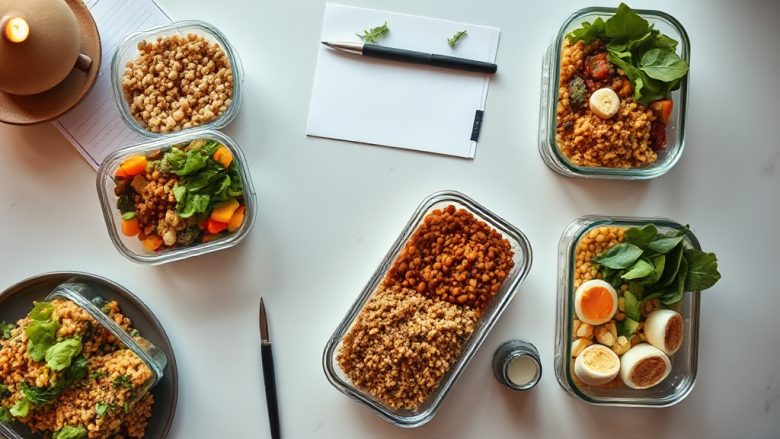
You spent Sunday chopping, roasting and stacking containers. By Wednesday you’re eating cold chicken that tastes like fridge, soggy greens and rice that has turned to paste. So the containers sit at the back of the shelf until Friday, when you tip them out and swear off meal prep forever.
The problem usually isn’t your cooking. It’s that you prepped the wrong things. Healthy meal prep ideas for the week work best when you prep components instead of finished plates, keep some things raw, and store each item the way it actually wants to be stored. Do that and Thursday’s lunch still has crunch, colour and flavour.
This is a system, not a recipe list. It takes about two hours on a Sunday, and it gives you roughly ten to twelve meals across the week without eating the same bowl five days running.
Why Prepping Whole Meals on Sunday Backfires
A fully assembled meal is a race against time. The moment dressing hits leaves, the clock starts. The moment sauce meets rice, the rice drinks it. By day three, every element has borrowed texture from its neighbour, and the whole container tastes flat.
There’s a second problem: boredom. Five identical lunches is fine on Monday and unbearable by Thursday. Most people don’t quit meal prep because it’s hard. They quit because it’s monotonous and the food quality drops faster than expected.
The fix is to separate cooking from assembling. Cook once, assemble daily. You still save the time, but you keep the variety and the texture.
The Three-Box Method: Base, Protein, Finish
Think of your fridge as holding three categories rather than seven complete meals.
Box one: bases. These are your grains, roasted vegetables and sturdy salads. They hold well for four to five days and form the bulk of each meal.
Box two: proteins. Cooked meat, fish, eggs, beans or tofu. Keep these plain or lightly seasoned so they can go in different directions later.
Box three: finishes. Dressings, sauces, herbs, nuts, seeds, cheese, lemon, chilli. These are added at the moment of eating and are what stop day four tasting like day one.
When you open the fridge on Wednesday, you’re not reheating a memory. You’re building a new plate from parts that are still in good condition.
What to Prep Ahead and What to Leave Fresh
This is where most plans fall apart, so it’s worth being specific.
Prep these ahead: roasted root vegetables, roasted peppers and courgette, cooked grains, hard-boiled eggs, cooked chicken thighs, lentil and bean dishes, soups, stews, tomato sauce, sliced onion, washed and dried salad leaves stored with a piece of kitchen paper, and any dressing you’ll use within four days.
Leave these fresh: cucumber, tomatoes, avocado, fresh herbs, rocket and spinach, apples and pears, radishes, spring onion, and anything you want to stay crisp. These take two minutes to add and completely change how a meal reads.
Cook to order: fish fillets, steak, prawns, eggs you want runny, and quick-cook greens like tenderstem broccoli or green beans. All take under ten minutes on the night.
The rule of thumb: if an ingredient goes limp, browns or turns watery when stored dressed and cut, don’t prep it. Add it fresh.
Storage Rules That Keep Food Tasting Right
Storage does more work than most people give it credit for. A few habits make a real difference.
Cool food before it goes in the fridge. Trapping heat creates condensation, and condensation is what turns roasted vegetables soft and makes salad leaves slimy.
Use glass containers with proper lids for anything saucy or oily. They don’t stain, they don’t hold onto last week’s curry, and you can see what’s inside without opening five lids.
Keep dressings and sauces in small separate jars. A single jar of vinaigrette or tahini dressing can serve four different meals without making any of them soggy.
Store grains and proteins in thin layers rather than deep tubs. They cool faster and reheat more evenly. If you’re freezing portions, flatten the bag or container so it thaws quickly.
Label with the day you cooked, not the day you plan to eat. You’ll trust the food more and waste less.
A Sample Week Built From One Prep Session
Here’s how the same components turn into five different lunches. Nothing here is repeated exactly.
| Day | Base | Protein | Finish |
|---|---|---|---|
| Monday | Brown rice and roasted peppers | Chicken thighs | Lemon, parsley, feta |
| Tuesday | Mixed leaves and cucumber | Hard-boiled eggs | Mustard vinaigrette, seeds |
| Wednesday | Roasted sweet potato and red onion | Spiced lentils | Yoghurt, mint, chilli flakes |
| Thursday | Quinoa and roasted courgette | Chickpeas | Tahini dressing, tomatoes |
| Friday | Wholegrain wrap or flatbread | Leftover chicken or falafel | Hummus, rocket, pickled onion |
One shop, one cook session, five lunches that don’t feel like the same meal wearing different hats.
How to Build Your Own Week in Under Two Hours
Start with the oven. Preheat it and get two trays in: one of root vegetables, one of peppers, courgette and onion. They’ll take thirty to forty minutes and need almost no attention.
While those roast, cook a pot of grains. Brown rice, quinoa or pearl barley all work. Cook more than you think you need, because grains are the cheapest way to stretch a meal and they freeze well.
Next, cook two proteins. Chicken thighs are more forgiving than breast because they stay moist when reheated. Lentils or chickpeas simmered with garlic, cumin and tomato give you a meat-free option that improves overnight. Boil six eggs at the same time.
Then make two dressings. A lemon and olive oil vinaigrette, and something creamier like tahini with lemon and water, or yoghurt with herbs. Two dressings, two completely different meals.
Finally, wash and dry your salad leaves properly. A salad spinner or a clean tea towel does the job. Dry leaves last three times longer than wet ones.
Total active time is closer to an hour than two. The rest is the oven working while you do something else.
Common Mistakes and How to Avoid Them
Over-seasoning everything is a quiet killer. If your chicken is already heavily spiced, it can’t go into a curry, a salad and a wrap without clashing. Season lightly at prep, finish boldly at the plate.
Another one: prepping too much of a single thing. Four kilos of roasted broccoli sounds efficient until you’re sick of it by Tuesday. Aim for variety in smaller quantities rather than volume in one item.
Don’t forget fat and acid. A squeeze of lemon, a drizzle of good olive oil or a spoon of yoghurt is often the difference between a sad container and a meal you’d happily pay for. Fat carries flavour; acid wakes it up.
And don’t prep for seven days if you know you’ll eat out twice. Prep for four or five and leave room for real life. A plan that bends is a plan that survives.
Frequently Asked Questions
How long does prepped food actually last in the fridge?
Cooked grains, roasted vegetables and cooked meats are generally good for four days if cooled quickly and stored properly. Soups and stews often improve and last five days. Anything with fresh leaves or cut tomato should be assembled on the day.
Can I freeze meal prep containers?
Yes, and it’s the easiest way to avoid Wednesday boredom. Freeze half your portions on Sunday and move them to the fridge the night before you need them. Soups, stews, curries and cooked grains freeze best. Avoid freezing cucumber, lettuce or anything you want crisp.
What if I don’t have time to cook on Sunday at all?
Split it. Cook grains and roast vegetables on Sunday evening, then cook proteins on Monday night while you’re making dinner anyway. Two short sessions beat one long one, and the food is fresher for it.
Do I need special containers?
No, but a mix helps. Glass for anything saucy, smaller jars for dressings, and one or two divided containers for days you’re taking lunch out. The container matters less than cooling food properly and keeping wet and dry elements apart.